CM Punjab T-Cash Card 2026 – Complete Guide to Benefits, Features & Usage
A step toward a cashless Punjab with smarter public transport and digital payments
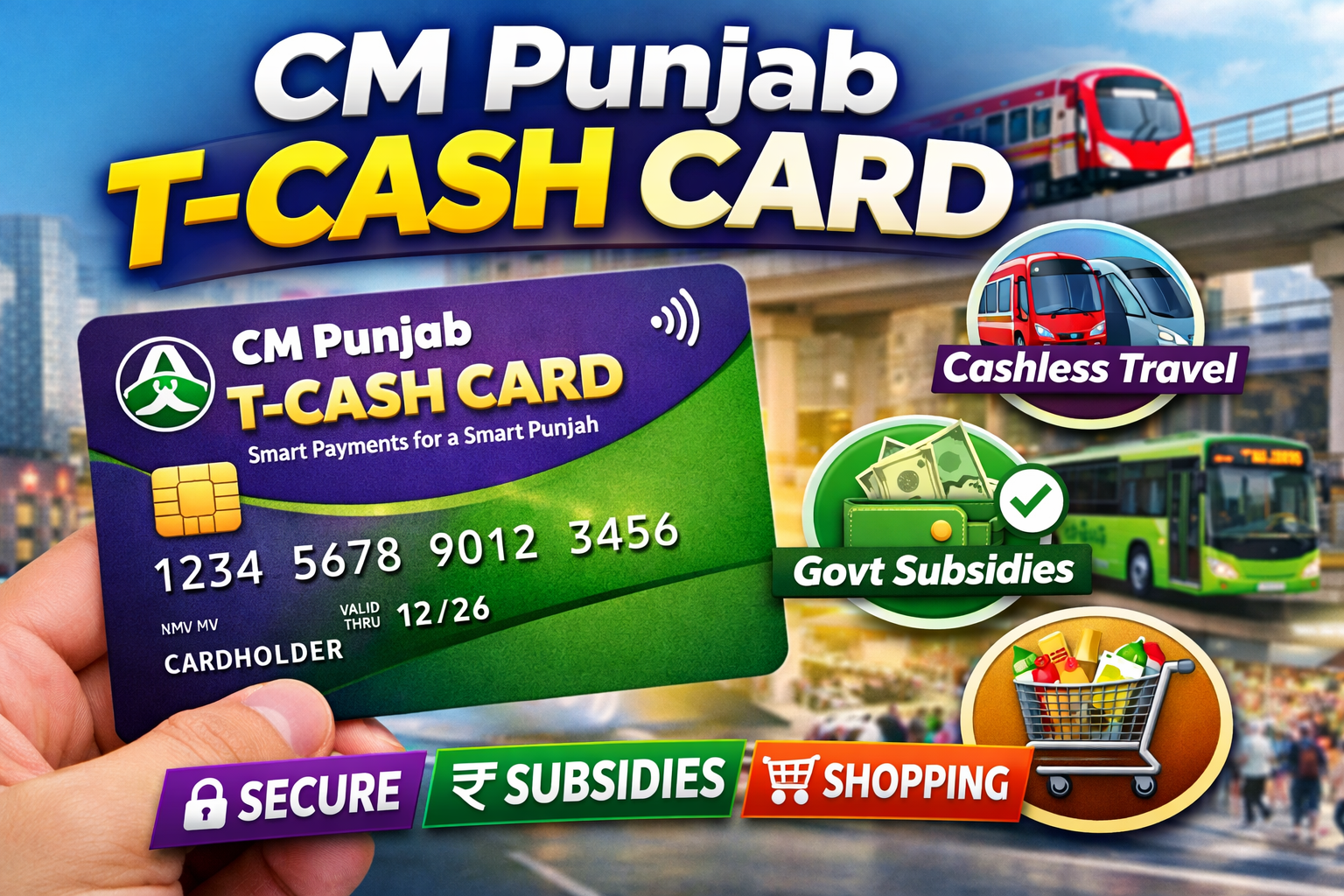

The Government of Punjab has taken a major step toward digital transformation by introducing the CM Punjab T-Cash Card. This initiative aims to modernize public payments, promote financial inclusion, and make everyday transactions easier for citizens. The T-Cash Card is designed as a prepaid, reloadable card that enables users to pay for public transport, shop at selected retailers, and potentially receive government subsidies directly.
In an era where digital payments are becoming the norm worldwide, Punjab’s move toward a unified cashless card system reflects a progressive vision. The T-Cash Card simplifies commuting and financial transactions while enhancing transparency and security.
What Is the CM Punjab T-Cash Card?
The CM Punjab T-Cash Card is a smart payment card introduced to support cashless transactions across public transport systems and other approved services in Punjab. It works similarly to a prepaid or debit card. Users can load money onto the card and use it for payments where the card is accepted.
The primary objective behind launching this card is to reduce dependence on physical cash, eliminate long ticket queues, and ensure a transparent fare collection system. Over time, the card may also integrate with other government welfare programs.
Key Features of the T-Cash Card
1. Cashless Travel
One of the main features of the T-Cash Card is seamless public transport access. It allows commuters to tap and travel without the need to purchase physical tickets.
The card can be used in major transport systems such as:
Lahore Metro Bus
Orange Line Metro Train
Speedo Bus Service
Passengers simply tap the card at the entry gate or terminal, and the fare is automatically deducted. This system reduces waiting time and makes daily commuting faster and more convenient.
2. Prepaid and Reloadable System
The T-Cash Card operates on a prepaid model. Users can recharge their card balance through designated service centers, ATMs, or digital payment platforms (as per official arrangements). This flexibility ensures that commuters can maintain balance easily without hassle.
3. Secure Transactions
Security is a critical part of digital payments. The T-Cash Card system includes PIN protection and secure transaction processing. In case of loss or theft, the card can typically be blocked through customer support channels, minimizing the risk of misuse.
Digital transactions are also traceable, which increases transparency and reduces fraud.
4. Potential Subsidy Transfers
Another important advantage of the T-Cash Card is its potential integration with government welfare programs. Financial assistance or subsidies from the Punjab government may be transferred directly to eligible beneficiaries’ cards. This method reduces dependency on intermediaries and ensures direct benefit transfer (DBT).
By using a digital card system, the government can improve accountability and ensure funds reach the right individuals.
5. Multi-Purpose Usage
Although initially focused on transport, the T-Cash Card may expand its usability to retail stores, utility payments, and other approved services. This multi-purpose function increases the card’s value beyond just commuting.
As digital infrastructure grows, the card could become an essential tool for everyday payments.
Benefits of the CM Punjab T-Cash Card
Faster Commuting
With tap-and-go functionality, passengers save time and avoid standing in long ticket lines.
Reduced Cash Handling
Carrying cash can be risky and inconvenient. The T-Cash Card reduces the need to handle physical money.
Transparency
All transactions are recorded digitally, which enhances financial transparency and prevents revenue leakage in transport systems.
Financial Inclusion
Citizens who may not have traditional bank accounts can still participate in digital transactions through a prepaid card system.
Environment-Friendly
By reducing paper tickets and printed tokens, the system supports eco-friendly practices and lowers operational waste.
Who Is Eligible?
Eligibility criteria may vary depending on government policies and updates. Generally, the card is available to:
Residents of Punjab
Valid CNIC holders
Regular public transport users
Eligible beneficiaries of government welfare schemes
Applicants should always check official announcements for updated requirements.
How the T-Cash Card Supports Digital Pakistan
The introduction of the T-Cash Card aligns with Pakistan’s broader digital transformation goals. Governments around the world are moving toward integrated payment systems that simplify service delivery. Punjab’s initiative reflects this global trend.
By adopting digital fare systems, the province ensures better revenue management, improved commuter experience, and more efficient service delivery. The long-term goal is to create a unified digital ecosystem where citizens can access multiple public services using a single card.
Challenges and Future Scope
While the T-Cash Card presents many advantages, its success depends on effective implementation, awareness campaigns, and widespread acceptance. Citizens need proper guidance on how to use, recharge, and secure their cards.
In the future, integration with mobile apps, QR payments, and online account management could further enhance its utility. Expanding acceptance to more cities and services would also increase adoption rates.
Final Thoughts
The CM Punjab T-Cash Card represents a significant advancement in Punjab’s journey toward a cashless and digitally empowered society. By enabling seamless public transport payments, secure transactions, and potential direct subsidy transfers, the card offers practical benefits for everyday life.
For daily commuters, it means convenience and speed. For the government, it means transparency and better financial management. And for society, it marks a step toward modernization and digital inclusion.
As Punjab continues to embrace technological innovation, initiatives like the T-Cash Card will play a vital role in shaping a smarter, more connected future.